
 English
 Русский

10:23AM 11/26/2026
preeti mmr
preeti mmr

preeti mmr > 12:59PM 09/10/2026
US Cardiac Surgery Instruments Market Forecast: Market Dynamics, Trends, and Competitive Landscape
Market Overview
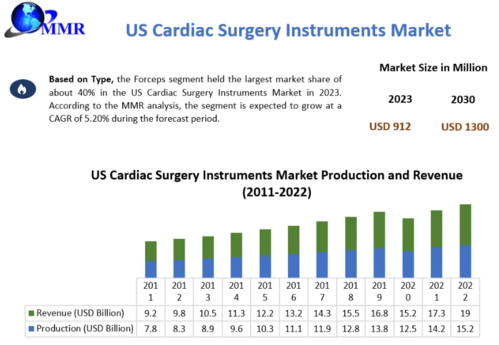
The US Cardiac Surgery Instruments Market was valued at approximately USD 912 million in 2023 and is expected to grow at a CAGR of 5.19% from 2024 to 2030, reaching nearly USD 1,300 million by 2030. The market represents a critical component of the broader medical device industry, encompassing specialized surgical instruments used in cardiac procedures, including coronary artery bypass grafting, heart valve surgery, and pediatric cardiac interventions.
Request Sample Link for More Details: https://www.maximizemarketresearch.com/request-sample/225405/
The increasing prevalence of cardiovascular diseases across the United States is creating sustained demand for cardiac surgical procedures and associated instruments. Cardiovascular conditions remain a major healthcare burden, while the country's aging population is particularly vulnerable to coronary artery disease, valvular heart disease, heart failure, and other cardiovascular disorders. The growing number of elderly patients requiring surgical intervention is therefore contributing significantly to market expansion.
At the same time, cardiac surgery is undergoing substantial technological transformation. Healthcare providers are increasingly adopting minimally invasive techniques, advanced surgical instruments, robotic-assisted procedures, and precision-focused technologies. These developments are encouraging manufacturers to introduce instruments that provide improved control, greater precision, enhanced ergonomics, and reduced tissue trauma.
The US market is also benefiting from the strong presence of established medical device manufacturers, advanced healthcare infrastructure, sophisticated cardiac centers, and substantial investment in medical technology. Hospitals and specialized cardiac facilities continue to seek innovative instruments capable of improving procedural efficiency and patient outcomes.
Market Drivers and Trends
Increasing Geriatric Population Supports Market Growth
One of the most important factors driving the US Cardiac Surgery Instruments Market is the increasing geriatric population. Older adults have a substantially higher risk of developing cardiovascular diseases and frequently require complex cardiac interventions. As the population aged 65 years and above expands, the demand for cardiac diagnostic, therapeutic, and surgical services is expected to increase.
Age-related cardiovascular conditions often require procedures involving specialized instruments such as forceps, clamps, scissors, and needle holders. Surgeons require instruments that offer precise manipulation of delicate cardiac tissues while minimizing procedural complications. Consequently, manufacturers are focusing on developing ergonomic and atraumatic instruments suitable for complex cardiac operations.
Request Sample Link for More Details: https://www.maximizemarketresearch.com/request-sample/225405/
Growing Adoption of Minimally Invasive Cardiac Surgery
The shift from conventional open procedures toward minimally invasive cardiac surgery is another significant market trend. Minimally invasive procedures can reduce tissue damage, postoperative discomfort, hospital stays, and recovery periods for appropriate patients.
This transition is generating demand for specialized instruments designed for smaller access points and restricted surgical fields. Micro-forceps, atraumatic forceps, specialized clamps, and precision scissors are increasingly important in minimally invasive procedures. The development of instruments compatible with advanced visualization systems and robotic platforms is also creating new opportunities for market participants.
Technological Advancements in Surgical Instruments
Technological innovation is transforming the design and functionality of cardiac surgery instruments. Manufacturers are incorporating improved materials, enhanced gripping mechanisms, ergonomic handles, precision tips, and energy-based technologies into surgical instruments.
Innovations such as bipolar cautery and other advanced surgical technologies can help surgeons achieve more controlled tissue manipulation and hemostasis. Robotic-assisted surgery is also influencing instrument development by requiring specialized tools capable of delivering precise movements within confined surgical spaces.
The increasing integration of technology into cardiac operating rooms is expected to encourage continued innovation throughout the forecast period.
Increasing Cardiac Disease Burden
The prevalence of coronary artery disease and valvular heart disease continues to support demand for cardiac surgery in the United States. A large patient population with cardiovascular disorders creates a substantial addressable market for cardiac interventions.
As healthcare providers seek effective treatment options for complex cardiovascular conditions, the requirement for reliable surgical instruments remains strong. Advances in patient selection, surgical techniques, imaging, and postoperative care are further contributing to the development of the cardiac surgery ecosystem.
Primary Market Constraints
Despite favorable growth prospects, the US Cardiac Surgery Instruments Market faces several challenges. High costs associated with advanced surgical instruments and limited affordability can restrict adoption, particularly among healthcare facilities operating under stringent budget constraints.
Advanced instruments designed for minimally invasive and robotic-assisted procedures can require considerable investment. Hospitals must also account for maintenance, sterilization, staff training, replacement, and technology integration costs. These factors can influence purchasing decisions and delay the adoption of premium surgical technologies.
Another challenge is the requirement for specialized training. Cardiac procedures are highly complex, and surgeons must possess extensive expertise to effectively use sophisticated instruments. The learning curve associated with advanced instruments may influence adoption, particularly when healthcare providers are transitioning from conventional surgical tools.
Sterilization and infection-control requirements also remain important considerations. Inadequate cleaning and sterilization of reusable instruments can increase infection risks, making effective instrument management essential in cardiac surgery.
Furthermore, the development of robotic and other advanced surgical technologies could alter demand for traditional instruments. While conventional tools remain essential, manufacturers must continuously innovate to maintain competitiveness as surgical techniques evolve.
Key Market Segments
By Type
Based on type, the Forceps segment held the largest market share of approximately 40% in 2023 and is expected to grow at a CAGR of around 5.20% during the forecast period.
Forceps are among the most frequently used instruments in cardiac surgery because they enable surgeons to grasp, manipulate, dissect, and stabilize tissues with precision. Their versatility makes them suitable for a wide range of procedures.
The segment includes vascular forceps, grasping forceps, and other forceps. Vascular forceps are particularly important when surgeons need to handle blood vessels carefully, while atraumatic forceps are designed to minimize tissue damage.
The growing adoption of minimally invasive cardiac surgery is increasing the importance of smaller, more precise forceps. Manufacturers are therefore emphasizing improved ergonomics, specialized tips, enhanced gripping capability, and compatibility with modern surgical techniques.
Other important product categories include needle holders, scissors, and clamps. Needle holders are essential for precise suturing, scissors are used for cutting tissues and sutures, and clamps provide controlled occlusion or stabilization during cardiac procedures.
By Application
The market is segmented by application into Coronary Artery Bypass Graft (CABG), Heart Valve Surgery, and Pediatric Cardiac Surgery.
CABG represents an important area of demand because specialized instruments are required for vessel harvesting, tissue manipulation, suturing, and anastomosis. Heart valve surgery also requires highly precise instruments because of the delicate nature of cardiac structures.
Pediatric cardiac surgery represents another specialized application. Surgical procedures involving children often require appropriately sized and highly precise instruments due to the smaller anatomical structures involved.
By End User
Based on end user, the market is divided into Hospitals and Cardiac Centers and Ambulatory Surgery Centers.
Hospitals and specialized cardiac centers account for a major portion of demand because they conduct complex and high-risk cardiac procedures and typically maintain sophisticated operating-room infrastructure. The increasing specialization of cardiac centers and availability of advanced surgical technologies are supporting instrument demand.
Ambulatory surgery centers are also gaining attention as healthcare systems explore efficient care models for appropriate procedures. However, the complexity of many cardiac operations means hospitals and specialized centers are expected to remain important end users throughout the forecast period.
Request Sample Link for More Details: https://www.maximizemarketresearch.com/request-sample/225405/
Major Industry Players
The US Cardiac Surgery Instruments Market includes several prominent global medical device companies with strong capabilities in cardiovascular technologies, surgical instruments, and related healthcare solutions. Key companies identified in the market landscape include:
Medtronic
Edwards Lifesciences
Terumo Corporation
B. Braun Melsungen AG
Boston Scientific Corporation
Abbott Laboratories
LivaNova
Snares
Forceps
Leading companies are focusing on product development, technological innovation, strategic collaborations, portfolio expansion, and improvements in surgical performance. Competitive intensity is influenced by the ability of manufacturers to deliver reliable instruments while addressing the growing demand for minimally invasive and technologically advanced cardiac procedures.
Companies are increasingly emphasizing ergonomics, precision, durability, sterilization compatibility, and ease of use. The development of instruments designed for specialized cardiac procedures and advanced surgical platforms is expected to remain an important competitive strategy.
Future Outlook
The outlook for the US Cardiac Surgery Instruments Market remains positive through 2030. Continued growth in the elderly population, cardiovascular disease burden, cardiac surgery volumes, minimally invasive procedures, and surgical technology adoption is expected to sustain market expansion.
The transition toward less invasive cardiac interventions is particularly significant because it is creating demand for specialized instruments that provide precision through smaller surgical access points. Robotic-assisted surgery and other technology-enabled procedures may further influence instrument design and competitive strategies.
At the same time, healthcare providers will continue to evaluate products based on clinical effectiveness, total cost of ownership, durability, ease of sterilization, and procedural efficiency. Manufacturers capable of balancing advanced functionality with cost-effectiveness are likely to gain opportunities in the evolving US market.
Frequently Asked Questions
1. What is the projected size of the US Cardiac Surgery Instruments Market by 2030?
The US Cardiac Surgery Instruments Market was valued at USD 912 million in 2023 and is projected to reach nearly USD 1,300 million by 2030.
2. What is the expected CAGR of the US Cardiac Surgery Instruments Market?
The market is expected to expand at a CAGR of 5.19% from 2024 to 2030.
3. What is the major growth driver for the market?
The increasing geriatric population, rising prevalence of cardiovascular diseases, growing cardiac surgery volumes, and adoption of minimally invasive surgical techniques are major factors supporting market growth.
4. Which product segment dominated the market in 2023?
The Forceps segment dominated the US Cardiac Surgery Instruments Market in 2023, accounting for approximately 40% of the market share.
5. Why are forceps widely used in cardiac surgery?
Forceps provide surgeons with precise control for grasping, dissecting, manipulating, and stabilizing delicate tissues. Their versatility and availability in specialized designs make them essential across various cardiac procedures.
Conclusion
The US Cardiac Surgery Instruments Market is positioned for steady growth, increasing from USD 912 million in 2023 to approximately USD 1,300 million by 2030, representing a CAGR of 5.19%. Demographic changes, increasing cardiovascular disease prevalence, technological advancements, and the shift toward minimally invasive cardiac procedures are expected to remain central to market development.
Most performing reports:
Germany Neurology Devices Market https://www.maximizemarketresearch.com/market-report/germany-neurology-devices-market/224461/
Japan Depression Therapeutics Market https://www.maximizemarketresearch.com/market-report/japan-depression-therapeutics-market/224946/
Malaysia Neurology Devices Market https://www.maximizemarketresearch.com/market-report/malaysia-neurology-devices-market/224967/
Connect With Us:
MAXIMIZE MARKET RESEARCH PVT. LTD.
2nd Floor, Navale IT park Phase 3,
Pune Banglore Highway, Narhe
Pune, Maharashtra 411041, India.
+91 9607365656
sales@maximizemarketresearch.com
About Maximize Market Research:
Maximize Market Research is one of the fastest-growing market research and business consulting firms serving clients globally. Our revenue impact and focused growth-driven research initiatives make us a proud partner of majority of the Fortune 500 companies. We have a diversified portfolio and serve a variety of industries such as IT & telecom, chemical, food & beverage, aerospace & defense, healthcare and others.
